

Most hose manufacturers recommend replacing hoses every 5-7 years as a preemptive measure to minimize downtime. However, some heavy use hoses or hoses that are used in harsh conditions may require a switch every 1-2 years. Hoses can be exposed to conditions such as; abrasion, temperature swings, vibration, and constant movement. If hoses aren’t replaced, it could result in several bad outcomes:
Equipment damage. Sudden loss in pressure or fluid spray can damage equipment.
Operator injuries. Hydraulic fluid is under a lot of pressure in the lines. If the lines leak or burst, pressurized fluid can injure operators.
Environmental spills. Hydraulic fluid is not great for the environment. Spills can result in fines or clean-up costs.
Expensive downtime. The cost of not working, paying employees while down, and driving to the store can add up. This is all BEFORE you have to pay for a new hose. This disturbs production and costs you money.
Factors That Influence Hose Life
Size
The size of the hydraulic line determines the flow rate needs of the whole system. Excessive velocity damages the inner surface of the hose’s tube. Other components can also be damaged from tube debris that is flowing through the system. Excessive flow rate also raises the temperature of the fluid in the system.
Temperature
Typical rubber hoses operate in temperatures ranging from -40 to 212 F. Specialty hose material can operate safely between 250 - 300 F. High temps cause the hoses to become hard, brittle, and cracked. Hoses become cracked without losing softness or flexibility when exposed to lower temperatures.
Pressure
All hoses have a maximum rated working pressure. Most hoses have a 4 to 1 surge rating. With that being said, each pressure spike causes cumulative damage within the hose. Try to use a hose that is rated for a few hundred PSI over the system’s maximum working pressure.
Application
Like pressure, each hose is designed for a set of system functions and duty cycles. On mobile equipment, you will see marks on hoses where they rub agains components and other hoses. On top of that, if hoses experience a lot of movement, it is important to route to allow proper length for flexing, twisting, or bending. Avoid bending hoses in multiple planes. Hoses that are routed near exhausts will have damage from the high temperatures. A good rule of thumb is that hoses in vertical installations will always have more stress than hoses used in horizontal installations.
Key Indicators That Hoses Need To Be Changed
Leakage
This could be any fluid weeping near fittings or around the hose body.
Damage
This can look like several things. The first is exposed wire reinforcement. All hoses have some sort of reinforcement under the top cover. If you see this, it means it is time to change the hose.
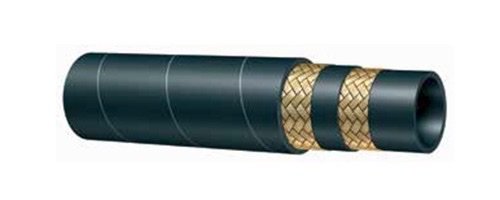
The reinforcement is the braided wire shown in the picture above. Depending on the SAE spec, this reinforcement can be several different materials.
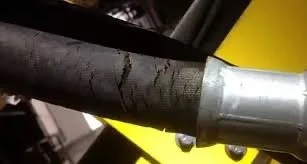
Deep cuts are another common form of damage to the hose. This is commonly found where the hose bends or flexes. This is usually a sign of age, UV damage, or mechanical stress. Make sure to address these issues with the new hose to prolong hose life.
Abrasion can be seen where the hose is rubbing against equipment, other hoses, or abrasive surfaces. Always try to minimize friction when it comes to hoses.
Cracking is a sign of temperature or UV exposure.
Deformation
Everyone has had a kink in their garden hose before. Hydraulic hoses work the same way. This can restrict fluid flow and weaken hoses over time. Hoses weaken since kinks break the wire reinforcement in the hose. It is not as big of an issue when using thermoplastic hose since the reinforcement is not made of metal wire. A kink is usually a result of improper routing or excessive movement in the system.
Bubbles/bulges form when the inner tube separates from the reinforcement. It can also be due to damage from pressure spikes.
Lastly, hoses will be deformed if they are twisted too much. Hoses will also flatten if they are crushed.
Conditional Changes
If hoses feel stiff or brittle, it is usually due to being too old or heat damaged. You also want to keep an eye out for soft or spongy spots on the hose. This will be where the hose fails next.
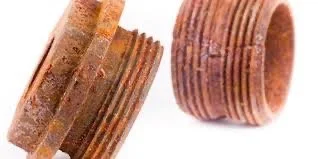
Corroded Fittings
This is more common in outdoor or marine environments. You will notice that the seal has been compromised. Red rust, corrosion, and cracked fittings are what you need to look for.
Best Practices
Follow a preventative maintenance schedule. Make the plan based upon system usage hours, environmental conditions, and inspection results.
Use proper tools and techniques. Manufacturers have approved crimping tools, pressure testers, and torque tools.
Match the hose to the application. Always choose hoses based on pressure rating, temp rating, bend radius, and fluid compatibility. Matching SAE specs is the easiest way to do this.
Always replace with compatible fittings. Do not mix hose and fitting brands. Don’t use the wrong fitting type.
Document hose replacements.
Perform routine inspections. It is best to do this on a daily or weekly basis. Look for the warning signs mentioned above.
Age matters. Even if a hose looks okay, check the manufacturer’s date code. Many rubbers degrade after 3-4 years.
System check. Failing hoses will cause machines to operate sluggishly or cylinders to be out of place.
Safety. NEVER CHECK FOR LEAKS WITH YOUR HANDS. YOU WILL LOSE FINGERS. Use cardboard or paper to avoid injuries from the pressure.
Tips To Extend Hose Life
Use correct routing and secure hoses with clamps
Ensure that hydraulic fluid is being properly filtered
Install abrasion guards or sleeves
Avoid tight bends
Protect hoses from heat and UV exposure